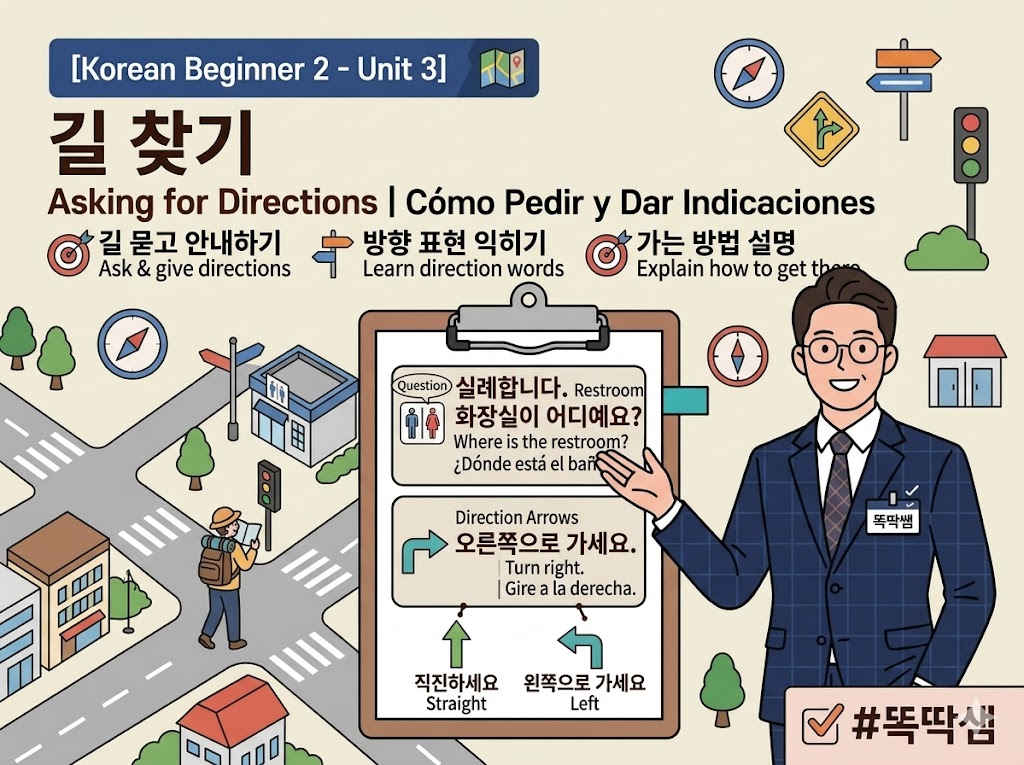
📘 [Korean Beginner 2 – Unit 3] 길 찾기 | Asking for Directions | Cómo Pedir y Dar Indicaciones
🎯 학습 목표 | Learning Goals | Objetivos de Aprendizaje
한국어로 길을 묻고 안내할 수 있다. Be able to ask for and give directions in Korean. Ser capaz de pedir y dar indicaciones en coreano.
오른쪽, 왼쪽, 직진 등의 방향 표현을 익힌다. Learn direction words such as right, left, and straight. Aprender palabras de dirección como derecha, izquierda y recto.
목적지까지 가는 방법을 자연스럽게 설명할 수 있다. Naturally explain how to get to a destination. Explicar de forma natural cómo llegar a un destino.
1️⃣ 핵심 어휘 | Key Vocabulary | Vocabulario Clave
🗺️ 방향 표현 | Direction Words | Palabras de Dirección
한국어 (Korean) 영어 (English) 스페인어 (Spanish) 발음 (Pronunciation)
| 오른쪽 | right | derecha | o-reun-jjok |
| 왼쪽 | left | izquierda | wen-jjok |
| 직진 | go straight | recto / todo seguido | jik-jin |
| 앞 | front | delante | ap |
| 뒤 | behind / back | detrás | dwi |
| 옆 | next to / beside | al lado | yeop |
| 건너편 | across / opposite side | enfrente | geon-neo-pyeon |
| 근처 | nearby / around | cerca | geun-cheo |
| 멀다 | to be far | estar lejos | meol-da |
| 가깝다 | to be close | estar cerca | ga-kkap-da |
📍 장소 어휘 | Place Vocabulary | Vocabulario de Lugares
한국어 (Korean) 영어 (English) 스페인어 (Spanish) 발음 (Pronunciation)
| 길 | road / street | calle / camino | gil |
| 골목 | alley | callejón | gol-mok |
| 사거리 | intersection | cruce / intersección | sa-geo-ri |
| 삼거리 | T-junction | bifurcación | sam-geo-ri |
| 횡단보도 | crosswalk | paso de peatones | hoeng-dan-bo-do |
| 신호등 | traffic light | semáforo | sin-ho-deung |
| 모퉁이 | corner | esquina | mo-tung-i |
| 건물 | building | edificio | geon-mul |
| 출구 | exit | salida | chul-gu |
| 입구 | entrance | entrada | ip-gu |
📌 문법 노트 | Grammar Note | Nota Gramatical
-(으)로 가세요 : 방향 안내 표현 | Giving Directions with -(으)로 가세요
방향을 안내할 때 방향 + (으)로 가세요 를 사용해요. When giving directions, use direction + (으)로 가세요. Al dar indicaciones, usa dirección + (으)로 가세요.
영어의 "Go to the ~", 스페인어의 "Vaya hacia ~" 와 같아요! This is like "Go to the ~" in English. Es como "Vaya hacia ~" en español.
형태 (Form / Forma) 예시 (Example / Ejemplo) 영어 (English) 스페인어 (Spanish)
| 방향 + (으)로 가세요 | 오른쪽으로 가세요. | Go to the right. | Vaya a la derecha. |
| 방향 + (으)로 가세요 | 왼쪽으로 가세요. | Go to the left. | Vaya a la izquierda. |
| 직진하세요 | 직진하세요. | Go straight. | Siga recto. |
💡 포인트 | Key Point | Punto Clave
자음으로 끝나면 -으로, 모음 또는 ㄹ로 끝나면 -로 를 써요! Use -으로 after a consonant, -로 after a vowel or ㄹ! ¡Usa -으로 después de consonante y -로 después de vocal o ㄹ!
어간 끝 (Ending) 형태 (Form) 예시 (Example)
| 자음 (Consonant) | -으로 | 오른쪽으로 가세요. |
| 모음 / ㄹ (Vowel / ㄹ) | -로 | 저쪽으로 가세요. |
2️⃣ 자주 쓰는 문장 | Useful Phrases | Frases Útiles
❓ 길 묻기 | Asking for Directions | Pedir Indicaciones
한국어 (Korean) 영어 (English) 스페인어 (Spanish)
| 실례합니다. | Excuse me. | Disculpe. |
| ~이/가 어디예요? | Where is ~? | ¿Dónde está ~? |
| 지하철역이 어디예요? | Where is the subway station? | ¿Dónde está la estación de metro? |
| 화장실이 어디예요? | Where is the restroom? | ¿Dónde está el baño? |
| 거기까지 어떻게 가요? | How do I get there? | ¿Cómo llego allí? |
| 걸어서 얼마나 걸려요? | How long does it take on foot? | ¿Cuánto tiempo se tarda a pie? |
| 가까워요? | Is it close? | ¿Está cerca? |
| 멀어요? | Is it far? | ¿Está lejos? |
🗣️ 길 안내하기 | Giving Directions | Dar Indicaciones
한국어 (Korean) 영어 (English) 스페인어 (Spanish)
| 직진하세요. | Go straight. | Siga recto. |
| 오른쪽으로 가세요. | Go to the right. | Vaya a la derecha. |
| 왼쪽으로 가세요. | Go to the left. | Vaya a la izquierda. |
| 사거리에서 오른쪽으로 가세요. | Turn right at the intersection. | Gire a la derecha en el cruce. |
| 신호등에서 왼쪽으로 가세요. | Turn left at the traffic light. | Gire a la izquierda en el semáforo. |
| 저 건물 옆에 있어요. | It's next to that building. | Está al lado de ese edificio. |
| 횡단보도를 건너세요. | Cross the crosswalk. | Cruce el paso de peatones. |
| 5분쯤 걸려요. | It takes about 5 minutes. | Se tarda unos 5 minutos. |
| 여기서 가까워요. | It's close from here. | Está cerca de aquí. |
| 조금 멀어요. | It's a bit far. | Está un poco lejos. |
3️⃣ 실전 대화 연습 | Real-Life Dialogue Practice | Práctica de Diálogo Real
혼자 공부한다면 A와 B 역할을 모두 소리 내어 읽어보세요! If you're studying alone, read both roles aloud! ¡Si estudias solo, lee en voz alta los dos roles!
대화 1: 지하철역 찾기 | Finding the Subway Station | Buscar la Estación de Metro
👤 A: 실례합니다. 지하철역이 어디예요? (Excuse me. Where is the subway station?) (Disculpe. ¿Dónde está la estación de metro?)
👤 B: 저 사거리에서 오른쪽으로 가세요. (At that intersection, turn right.) (En ese cruce, gire a la derecha.)
👤 A: 걸어서 얼마나 걸려요? (How long does it take on foot?) (¿Cuánto tiempo se tarda a pie?)
👤 B: 5분쯤 걸려요. 가까워요! (It takes about 5 minutes. It's close!) (Se tarda unos 5 minutos. ¡Está cerca!)
👤 A: 감사합니다! (Thank you!) (¡Gracias!)
대화 2: 편의점 찾기 | Finding a Convenience Store | Buscar una Tienda de Conveniencia
👤 A: 저기요, 근처에 편의점이 있어요? (Excuse me, is there a convenience store nearby?) (Disculpe, ¿hay una tienda de conveniencia cerca?)
👤 B: 네, 있어요. 이 길로 직진하세요. 신호등에서 왼쪽으로 가세요. (Yes, there is. Go straight down this road. Turn left at the traffic light.) (Sí, hay una. Siga recto por esta calle. Gire a la izquierda en el semáforo.)
👤 A: 횡단보도를 건너야 해요? (Do I need to cross the crosswalk?) (¿Tengo que cruzar el paso de peatones?)
👤 B: 아니요. 신호등 바로 옆에 있어요. (No. It's right next to the traffic light.) (No. Está justo al lado del semáforo.)
👤 A: 아, 알겠어요. 감사합니다! (Oh, I see. Thank you!) (¡Ah, entendido. Gracias!)
대화 3: 화장실 찾기 | Finding the Restroom | Buscar el Baño
👤 A: 실례합니다. 화장실이 어디예요? (Excuse me. Where is the restroom?) (Disculpe. ¿Dónde está el baño?)
👤 B: 저 건물 입구로 들어가서 오른쪽에 있어요. (Go into the entrance of that building and it's on the right.) (Entre por la entrada de ese edificio y está a la derecha.)
👤 A: 멀어요? (Is it far?) (¿Está lejos?)
👤 B: 아니요, 바로 앞이에요! (No, it's right in front!) (¡No, está justo enfrente!)
🌏 문화 팁 | Culture Tip | Consejo Cultural
📱 네이버 지도 & 카카오맵 | Naver Maps & KakaoMap 한국에서 길을 찾을 때 네이버 지도나 카카오맵을 사용하면 매우 편리해요. 구글 지도보다 한국에서 훨씬 정확하고 자세해요. When finding your way in Korea, Naver Maps or KakaoMap are very convenient. They are much more accurate and detailed in Korea than Google Maps. Al buscar direcciones en Corea, Naver Maps o KakaoMap son muy convenientes. Son mucho más precisos y detallados en Corea que Google Maps.
🚇 지하철역 출구 번호 | Subway Exit Numbers 한국 지하철역에는 출구마다 번호가 있어요. 약속을 잡을 때 "2번 출구 앞에서 만나요" 처럼 출구 번호를 말하는 것이 일반적이에요. Korean subway stations have numbered exits. When making plans, it's common to say "Let's meet in front of exit 2." Las estaciones de metro coreanas tienen salidas numeradas. Al quedar, es común decir "Nos vemos frente a la salida 2."
🙋 모르면 물어보세요! | Don't Hesitate to Ask! 한국 사람들은 대체로 길을 묻는 외국인을 도와주려고 해요. 모르면 "실례합니다!" 하고 용감하게 물어보세요! Koreans generally try to help foreigners asking for directions. If you don't know, bravely say "실례합니다!" and ask! Los coreanos generalmente intentan ayudar a los extranjeros que piden indicaciones. Si no sabes, ¡di "실례합니다!" con valentía y pregunta!
✏️ 연습 문제 | Practice Exercises | Ejercicios de Práctica
먼저 스스로 풀어보고, 아래 정답과 비교해 보세요! Try answering on your own first, then check the answers below! ¡Intenta responder por tu cuenta primero y luego comprueba las respuestas!
연습 1. 빈칸에 알맞은 단어를 넣으세요. Fill in the blanks with the correct word. Rellena los espacios con la palabra correcta.
① 은행이 __________ 있어요. (left) ② 이 길로 __________ 가세요. (straight) ③ 두 번째 __________에서 오른쪽으로 가세요. (intersection) ④ 편의점은 학교 __________에 있어요. (next to) ⑤ 걸어서 10분쯤 __________. (it takes)
✅ 정답 | Answers | Respuestas
① 왼쪽에 ② 직진해서 / 직진하세요 ③ 사거리 ④ 옆 ⑤ 걸려요
연습 2. 문장을 한국어로 바꾸세요. Translate the sentences into Korean. Traduce las oraciones al coreano.
① Where is the post office? / ¿Dónde está la oficina de correos? → ___________________________
② Turn right at the corner. / Gire a la derecha en la esquina. → ___________________________
③ Go straight for two blocks. / Siga recto dos manzanas. → ___________________________
④ Is there a convenience store nearby? / ¿Hay una tienda de conveniencia cerca? → ___________________________
✅ 정답 | Answers | Respuestas
① 우체국이 어디예요? ② 모퉁이에서 오른쪽으로 가세요. ③ 두 블록 직진하세요. ④ 근처에 편의점이 있어요?
연습 3. 아래 대화의 빈칸을 채우세요. Fill in the blanks in the dialogue. Rellena los espacios en el diálogo.
👤 A: ____________합니다. 병원이 ____________예요? (Excuse me. Where is the hospital?) (Disculpe. ¿Dónde está el hospital?)
👤 B: 저 ____________에서 왼쪽으로 가세요. (Turn left at that intersection.) (Gire a la izquierda en ese cruce.)
👤 A: 걸어서 얼마나 ____________? (How long does it take on foot?) (¿Cuánto tiempo se tarda a pie?)
👤 B: 10분쯤 ____________. 조금 멀어요. (It takes about 10 minutes. It's a bit far.) (Se tarda unos 10 minutos. Está un poco lejos.)
✅ 정답 | Answers | Respuestas
① 실례 / 어디 ② 사거리 ③ 걸려요 ④ 걸려요
🎯 정리 | Summary | Resumen
오늘은 길을 묻고 안내하는 표현들을 배웠습니다. 핵심 내용을 정리해 볼까요? Today we learned expressions for asking and giving directions. Let's review! Hoy aprendimos expresiones para pedir y dar indicaciones. ¡Repasemos!
길을 물을 때는 "실례합니다. ~이/가 어디예요?" 를 사용하세요. Use "실례합니다. ~이/가 어디예요?" to ask for directions. Usa "실례합니다. ~이/가 어디예요?" para pedir indicaciones.
방향을 안내할 때는 "방향 + (으)로 가세요" 를 사용하세요. Use "direction + (으)로 가세요" to give directions. Usa "dirección + (으)로 가세요" para dar indicaciones.
직진하세요 = Go straight / Siga recto 오른쪽으로 가세요 = Turn right / Gire a la derecha 왼쪽으로 가세요 = Turn left / Gire a la izquierda
거리를 말할 때는 "~분쯤 걸려요" 를 사용하세요. Use "~분쯤 걸려요" to say how long it takes. Usa "~분쯤 걸려요" para decir cuánto tiempo se tarda.
💡 독학 팁 | Self-Study Tip | Consejo de Autoestudio
지도 앱으로 연습하기: 네이버 지도나 카카오맵을 열고 목적지까지 가는 길을 한국어로 소리 내어 설명해 보세요. 실제 상황처럼 연습할 수 있어요! Practice with Map Apps: Open Naver Maps or KakaoMap and describe the route to a destination aloud in Korean. You can practice as if it's a real situation! Practica con Apps de Mapas: Abre Naver Maps o KakaoMap y describe en voz alta en coreano la ruta hasta un destino. ¡Puedes practicar como si fuera una situación real!
동네 산책하며 연습하기: 산책하면서 주변 건물과 방향을 한국어로 말해보세요. "편의점이 오른쪽에 있어요", "저 건물 앞에 신호등이 있어요" 처럼요! Practice While Walking: While taking a walk, describe the surroundings in Korean. Like "The convenience store is on the right", "There's a traffic light in front of that building"! Practica Mientras Caminas: Al dar un paseo, describe el entorno en coreano. ¡Como "La tienda está a la derecha" o "Hay un semáforo frente a ese edificio"!
🏷️ 해시태그 | Hashtags