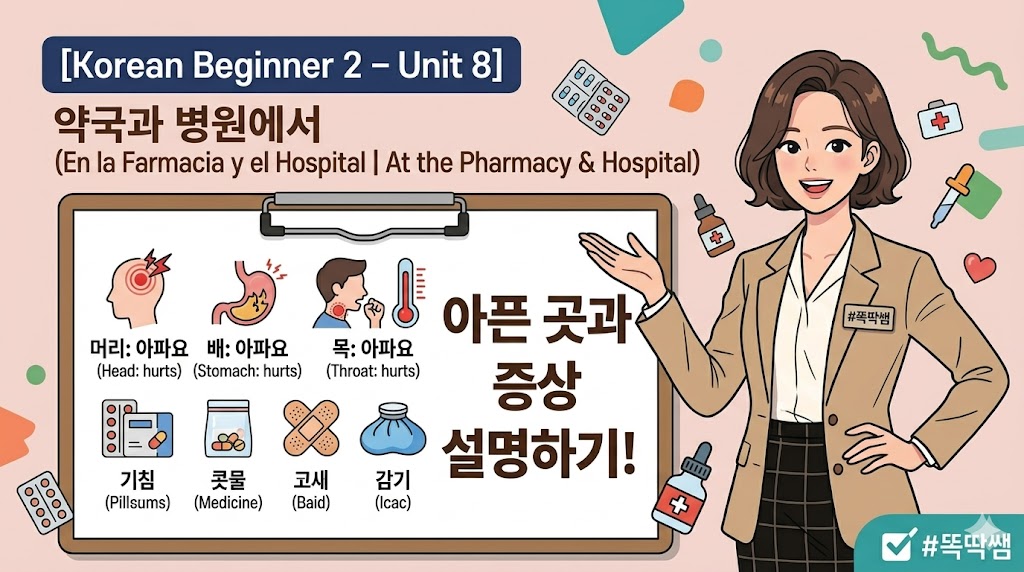
🇰🇷 [Korean Beginner 2 – Unit 8] 약국과 병원에서 | At the Pharmacy & Hospital | En la Farmacia y el Hospital
🎯 학습 목표 | Learning Goals | Objetivos de Aprendizaje
약국과 병원에서 필요한 기본 표현을 말할 수 있다. Be able to use basic expressions at the pharmacy and hospital. Ser capaz de usar expresiones básicas en la farmacia y el hospital.
몸이 아플 때 증상을 한국어로 설명할 수 있다. Describe symptoms in Korean when feeling unwell. Describir síntomas en coreano cuando no te encuentras bien.
약을 구입하거나 진료를 받을 때 필요한 어휘를 익힌다. Learn vocabulary needed for buying medicine or receiving medical care. Aprender el vocabulario necesario para comprar medicamentos o recibir atención médica.
1️⃣ 핵심 어휘 | Key Vocabulary | Vocabulario Clave
🩺 신체 부위 | Body Parts | Partes del Cuerpo
| 한국어 (Korean) | English | Spanish | 발음 (Pronunciation) |
| 머리 | head | cabeza | meo-ri |
| 눈 | eye | ojo | nun |
| 코 | nose | nariz | ko |
| 귀 | ear | oreja | gwi |
| 목 | throat / neck | garganta / cuello | mok |
| 어깨 | shoulder | hombro | eo-kae |
| 가슴 | chest | pecho | ga-seum |
| 배 | stomach / belly | estómago / barriga | bae |
| 등 | back | espalda | deung |
| 허리 | lower back / waist | cintura / espalda baja | heo-ri |
| 팔 | arm | brazo | pal |
| 손 | hand | mano | son |
| 손가락 | finger | dedo de la mano | son-ga-rak |
| 다리 | leg | pierna | da-ri |
| 무릎 | knee | rodilla | mu-reup |
| 발 | foot | pie | bal |
| 발가락 | toe | dedo del pie | bal-ga-rak |
🤒 증상 표현 어휘 | Symptom Vocabulary | Vocabulario de Síntomas
| 한국어 (Korean) | English | Spanish | 발음 (Pronunciation) |
| 아프다 | to be sick / to hurt | doler / estar enfermo | a-peu-da |
| 열이 나다 | to have a fever | tener fiebre | yeo-ri na-da |
| 기침이 나다 | to have a cough | tener tos | gi-chi-mi na-da |
| 콧물이 나다 | to have a runny nose | tener mocos | kon-mu-ri na-da |
| 코가 막히다 | to have a stuffy nose | tener la nariz tapada | ko-ga ma-ki-da |
| 목이 아프다 | to have a sore throat | tener dolor de garganta | mo-gi a-peu-da |
| 머리가 아프다 | to have a headache | tener dolor de cabeza | meo-ri-ga a-peu-da |
| 배가 아프다 | to have a stomachache | tener dolor de estómago | bae-ga a-peu-da |
| 어지럽다 | to feel dizzy | sentirse mareado | eo-ji-reop-da |
| 토하다 | to vomit | vomitar | to-ha-da |
| 설사하다 | to have diarrhea | tener diarrea | seol-sa-ha-da |
| 다치다 | to get injured | lastimarse | da-chi-da |
| 베이다 | to get cut | cortarse | be-i-da |
| 붓다 | to swell | hincharse | but-da |
| 가렵다 | to be itchy | tener picazón | ga-ryeop-da |
| 피곤하다 | to be tired | estar cansado | pi-gon-ha-da |
2️⃣ 자주 쓰는 문장 | Useful Phrases | Frases Útiles
🏥 병원에서 | At the Hospital | En el Hospital
| 한국어 (Korean) | English | Spanish |
| 진료를 받고 싶어요. | I'd like to see a doctor. | Me gustaría ver a un médico. |
| 예약하고 싶어요. | I'd like to make an appointment. | Me gustaría hacer una cita. |
| 어디가 아프세요? | Where does it hurt? | ¿Dónde le duele? |
| 언제부터 아팠어요? | Since when have you felt unwell? | ¿Desde cuándo se siente mal? |
| 여기가 아파요. | It hurts here. | Me duele aquí. |
| 열이 있어요. | I have a fever. | Tengo fiebre. |
| 이틀 전부터 아팠어요. | I've been sick since two days ago. | Llevo dos días sintiéndome mal. |
| 알레르기가 있어요. | I have an allergy. | Tengo alergia. |
| 약을 먹고 있어요. | I'm taking medicine. | Estoy tomando medicamentos. |
| 얼마나 기다려야 해요? | How long do I have to wait? | ¿Cuánto tiempo tengo que esperar? |
| 처방전 주세요. | Please give me a prescription. | Por favor, déme una receta. |
| 입원해야 해요? | Do I need to be hospitalized? | ¿Necesito hospitalizarme? |
💊 약국에서 | At the Pharmacy | En la Farmacia
| 한국어 (Korean) | English | Spanish |
| 두통약 있어요? | Do you have medicine for headaches? | ¿Tiene medicina para el dolor de cabeza? |
| 소화제 주세요. | Please give me digestive medicine. | Por favor, déme un digestivo. |
| 감기약 주세요. | Please give me cold medicine. | Por favor, déme medicina para el resfriado. |
| 파스 있어요? | Do you have pain patches? | ¿Tiene parches para el dolor? |
| 이 약 어떻게 먹어요? | How do I take this medicine? | ¿Cómo tomo este medicamento? |
| 하루에 몇 번 먹어요? | How many times a day should I take it? | ¿Cuántas veces al día debo tomarlo? |
| 식사 후에 드세요. | Take it after meals. | Tómelo después de las comidas. |
| 처방전 없이 살 수 있어요? | Can I buy it without a prescription? | ¿Puedo comprarlo sin receta? |
3️⃣ 실전 대화 연습 | Real-Life Dialogue Practice | Práctica de Diálogo Real
혼자 공부한다면 모든 역할을 소리 내어 읽어보세요! If you're studying alone, read all roles aloud! ¡Si estudias solo, lee en voz alta todos los roles!
대화 1: 병원에서 진료 받기 | Seeing a Doctor | Visitar al Médico
👤 간호사 (Nurse / Enfermera): 어디가 불편하세요? (What brings you in today?) (¿Qué le trae por aquí hoy?)
👤 환자 (Patient / Paciente): 어제부터 목이 아프고 열이 나요. (My throat has been hurting and I have a fever since yesterday.) (Desde ayer me duele la garganta y tengo fiebre.)
👤 간호사: 얼마나 됐어요? (How long has this been going on?) (¿Cuánto tiempo lleva así?)
👤 환자: 어제 저녁부터요. 기침도 조금 나요. (Since yesterday evening. I also have a slight cough.) (Desde ayer por la noche. También tengo un poco de tos.)
👤 의사 (Doctor / Médico): 입을 벌려 보세요. 목이 많이 부었네요. (Open your mouth. Your throat is quite swollen.) (Abra la boca. Su garganta está bastante inflamada.)
👤 환자: 심각한 건가요? (Is it serious?) (¿Es grave?)
👤 의사: 아니요, 괜찮아요. 약 처방해 드릴게요. 푹 쉬세요. (No, it's okay. I'll prescribe some medicine. Get plenty of rest.) (No, está bien. Le voy a recetar medicamentos. Descanse mucho.)
대화 2: 약국에서 약 사기 | Buying Medicine at the Pharmacy | Comprar Medicamentos en la Farmacia
👤 약사 (Pharmacist / Farmacéutico): 어떻게 오셨어요? (How can I help you?) (¿En qué le puedo ayudar?)
👤 손님 (Customer / Cliente): 머리가 아프고 열이 조금 있어요. 두통약이랑 해열제 있어요? (I have a headache and a slight fever. Do you have headache medicine and fever reducer?) (Me duele la cabeza y tengo un poco de fiebre. ¿Tiene analgésico y antifebril?)
👤 약사: 네, 있어요. 처방전 있으세요? (Yes, we have them. Do you have a prescription?) (Sí, los tenemos. ¿Tiene receta médica?)
👤 손님: 아니요, 없어요. 처방전 없이 살 수 있어요? (No, I don't. Can I buy them without a prescription?) (No, no tengo. ¿Puedo comprarlos sin receta?)
👤 약사: 네, 이거 드세요. 하루 세 번, 식사 후에 드세요. (Yes, take these. Three times a day, after meals.) (Sí, tome estos. Tres veces al día, después de las comidas.)
👤 손님: 감사합니다. 얼마예요? (Thank you. How much is it?) (Gracias. ¿Cuánto es?)
👤 약사: 오천 원입니다. (It's 5,000 won.) (Son 5.000 wones.)
🌏 문화 팁 | Culture Tip | Consejo Cultural
🏥 병원 종류 | Types of Medical Facilities | Tipos de Centros Médicos 한국에는 의원(소형 병원), 병원(중형), 종합병원(대형) 이 있어요. 가벼운 증상은 동네 의원에서 진료받는 것이 빠르고 저렴해요. Korea has small clinics (의원), medium hospitals (병원), and large general hospitals (종합병원). For mild symptoms, visiting a local clinic is faster and cheaper. Corea tiene clínicas pequeñas (의원), hospitales medianos (병원) y hospitales generales grandes (종합병원). Para síntomas leves, visitar una clínica local es más rápido y barato.
💊 약국 | Pharmacies | Farmacias 한국 약국은 처방전 없이도 살 수 있는 일반 의약품이 많아요. 약사에게 증상을 말하면 적합한 약을 추천해 줘요. Korean pharmacies carry many over-the-counter medicines. Tell the pharmacist your symptoms and they'll recommend the right medicine. Las farmacias coreanas tienen muchos medicamentos sin receta. Dile al farmacéutico tus síntomas y te recomendará el medicamento adecuado.
💳 건강보험 | Health Insurance | Seguro Médico 한국은 국민건강보험이 있어서 병원비의 일부만 내면 돼요. 외국인도 일정 기간 거주하면 가입할 수 있어요. Korea has National Health Insurance, so patients only pay a portion of medical costs. Foreigners who reside in Korea for a certain period can also enroll. Corea tiene el Seguro Nacional de Salud, por lo que los pacientes solo pagan una parte de los costos médicos. Los extranjeros que residan en Corea por un período determinado también pueden inscribirse.
🏪 편의점 의약품 | Convenience Store Medicine | Medicamentos en Tiendas de Conveniencia 한국 편의점에서도 소화제, 두통약, 파스 등 간단한 의약품을 구입할 수 있어요! In Korea, you can also buy simple medicines like digestive aids, headache pills, and pain patches at convenience stores! ¡En Corea también puedes comprar medicamentos simples como digestivos, analgésicos y parches para el dolor en tiendas de conveniencia!
✏️ 연습 문제 | Practice Exercises | Ejercicios de Práctica
먼저 스스로 풀어보고, 아래 정답과 비교해 보세요! Try answering on your own first, then check the answers below! ¡Intenta responder por tu cuenta primero y luego comprueba las respuestas!
연습 1. 증상을 한국어로 말해보세요. Describe the symptoms in Korean. Describe los síntomas en coreano.
① You have a headache. / Tienes dolor de cabeza. → ___________________________
② You have a runny nose and a cough. / Tienes mocos y tos. → ___________________________
③ Your stomach hurts. / Te duele el estómago. → ___________________________
④ You feel dizzy and tired. / Te sientes mareado y cansado. → ___________________________
✅ 정답 | Answers | Respuestas
① 머리가 아파요. ② 콧물이 나고 기침이 나요. ③ 배가 아파요. ④ 어지럽고 피곤해요.
연습 2. 빈칸에 알맞은 표현을 넣으세요. Fill in the blanks with the correct expression. Rellena los espacios con la expresión correcta.
① 병원에서 의사를 만나고 싶을 때: "____________을 받고 싶어요."
② 약을 하루에 먹는 횟수를 물어볼 때: "하루에 몇 번 ____________?"
③ 처방전 없이 약을 사고 싶을 때: "처방전 없이 ____________ 수 있어요?"
④ 아픈 곳을 가리키며 말할 때: "____________가 아파요."
✅ 정답 | Answers | Respuestas
① 진료 ② 먹어요 ③ 살 ④ 여기 (또는 신체 부위: 머리, 배, 목 등)
연습 3. 문장을 한국어로 바꾸세요. Translate into Korean. Traduce al coreano.
① I have a sore throat and a fever. / Tengo dolor de garganta y fiebre. → ___________________________
② How many times a day should I take this? / ¿Cuántas veces al día debo tomarlo? → ___________________________
③ I'd like to make an appointment. / Me gustaría hacer una cita. → ___________________________
④ Can I buy it without a prescription? / ¿Puedo comprarlo sin receta? → ___________________________
✅ 정답 | Answers | Respuestas
① 목이 아프고 열이 나요. ② 이거 하루에 몇 번 먹어요? ③ 예약하고 싶어요. ④ 처방전 없이 살 수 있어요?
🎯 정리 | Summary | Resumen
오늘은 약국과 병원에서 필요한 표현들을 배웠습니다. 핵심 내용을 정리해 볼까요? Today we learned expressions needed at the pharmacy and hospital. Let's review the key points! Hoy aprendimos las expresiones necesarias en la farmacia y el hospital. ¡Repasemos los puntos clave!
| 한국어 (Korean) | English | Spanish |
| __(신체 부위)__가 아파요. | My (body part) hurts. | Me duele (parte del cuerpo). |
| 진료를 받고 싶어요. | I'd like to see a doctor. | Me gustaría ver a un médico. |
| (약 이름) 주세요. | Please give me (medicine). | Por favor, déme (medicamento). |
| 하루에 몇 번 먹어요? | How many times a day? | ¿Cuántas veces al día? |
| 식사 후에 드세요. | Take it after meals. | Tómelo después de las comidas. |
💡 독학 팁 | Self-Study Tip | Consejo de Autoestudio
📇 신체 부위 카드 만들기 | Make Body Part Flashcards | Haz Tarjetas de Partes del Cuerpo 신체 부위 그림을 그리고 각 부위의 한국어 이름을 써보세요. 냉장고나 거울에 붙여두고 매일 보면서 외우세요! Draw a body diagram and write the Korean names for each body part. Stick it on your fridge or mirror and review it daily! ¡Dibuja un diagrama del cuerpo y escribe los nombres coreanos de cada parte. Pégalo en tu nevera o espejo y repásalo diariamente!
📺 한국 드라마 병원 장면 활용 | Use Hospital Scenes in K-Dramas | Usa Escenas de Hospital en K-Dramas 한국 드라마의 병원 장면을 보면서 오늘 배운 표현이 어떻게 사용되는지 확인해 보세요! Watch hospital scenes in Korean dramas to see how today's expressions are used in real context! ¡Mira escenas de hospital en dramas coreanos para ver cómo se usan las expresiones de hoy en contexto real!
🏷️ 해시태그 | Hashtags