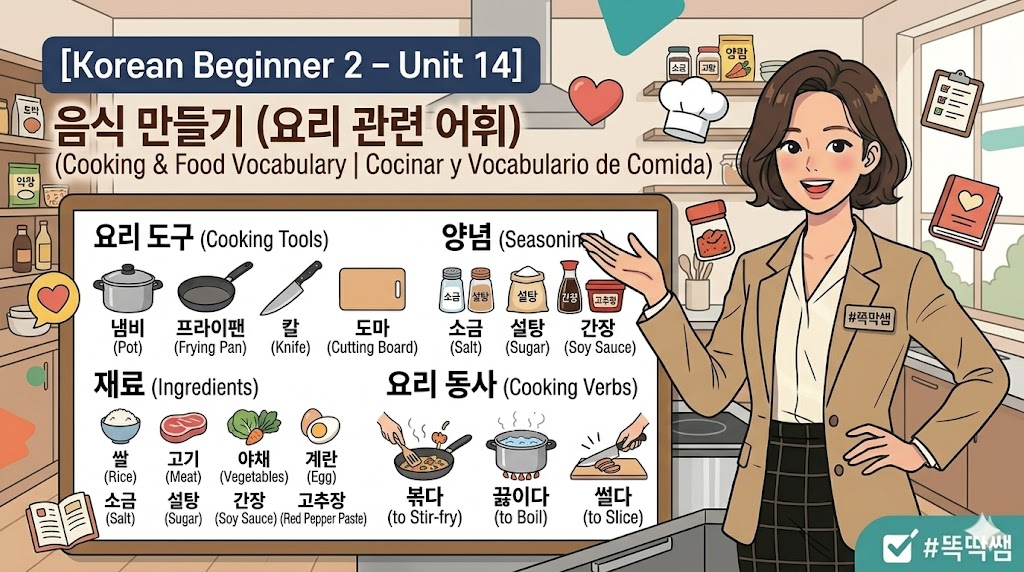
🇰🇷 [Korean Beginner 2 – Unit 14] 음식 만들기 (요리 관련 어휘) | Cooking & Food Vocabulary | Cocinar y Vocabulario de Comida
🎯 학습 목표 | Learning Goals | Objetivos de Aprendizaje
요리와 관련된 기본 어휘를 익힐 수 있다. Learn basic vocabulary related to cooking. Aprender el vocabulario básico relacionado con la cocina.
요리 방법과 재료를 한국어로 설명할 수 있다. Be able to describe cooking methods and ingredients in Korean. Ser capaz de describir métodos de cocción e ingredientes en coreano.
한국 음식의 기본 조리법을 이해하고 표현할 수 있다. Understand and express basic Korean recipes. Comprender y expresar recetas básicas coreanas.
1️⃣ 핵심 어휘 | Key Vocabulary | Vocabulario Clave
🥘 요리 도구 | Cooking Tools | Utensilios de Cocina
| 한국어 (Korean) | English | Spanish | 발음 (Pronunciation) |
| 냄비 | pot | olla | naem-bi |
| 프라이팬 | frying pan | sartén | peu-ra-i-paen |
| 칼 | knife | cuchillo | kal |
| 도마 | cutting board | tabla de cortar | do-ma |
| 그릇 | bowl / dish | cuenco / plato | geu-reut |
| 젓가락 | chopsticks | palillos | jeot-ga-rak |
| 숟가락 | spoon | cuchara | sut-ga-rak |
| 뚜껑 | lid / cover | tapa | ttu-kkeong |
| 체 | strainer / sieve | colador | che |
| 오븐 | oven | horno | o-beun |
| 전자레인지 | microwave | microondas | jeon-ja-re-in-ji |
| 믹서기 | blender | batidora | mik-seo-gi |
🥦 재료 | Ingredients | Ingredientes
| 한국어 (Korean) | English | Spanish | 발음 (Pronunciation) |
| 쌀 | rice | arroz | ssal |
| 고기 | meat | carne | go-gi |
| 소고기 | beef | ternera / res | so-go-gi |
| 돼지고기 | pork | cerdo | dwae-ji-go-gi |
| 닭고기 | chicken | pollo | dak-go-gi |
| 생선 | fish | pescado | saeng-seon |
| 채소 / 야채 | vegetables | verduras | chae-so / ya-chae |
| 양파 | onion | cebolla | yang-pa |
| 마늘 | garlic | ajo | ma-neul |
| 파 | green onion | cebolleta | pa |
| 고추 | chili pepper | guindilla / chile | go-chu |
| 두부 | tofu | tofu | du-bu |
| 계란 / 달걀 | egg | huevo | gye-ran / dal-gyal |
| 버섯 | mushroom | seta / champiñón | beo-seot |
🧂 양념 | Seasonings | Condimentos
| 한국어 (Korean) | English | Spanish | 발음 (Pronunciation) |
| 소금 | salt | sal | so-geum |
| 설탕 | sugar | azúcar | seol-tang |
| 간장 | soy sauce | salsa de soja | gan-jang |
| 된장 | fermented soybean paste | pasta de soja fermentada | doen-jang |
| 고추장 | red pepper paste | pasta de pimiento rojo | go-chu-jang |
| 참기름 | sesame oil | aceite de sésamo | cham-gi-reum |
| 식초 | vinegar | vinagre | sik-cho |
| 후추 | black pepper | pimienta negra | hu-chu |
| 깨 | sesame seeds | semillas de sésamo | kkae |
🍳 요리 동사 | Cooking Verbs | Verbos de Cocina
| 한국어 (Korean) | English | Spanish | 발음 (Pronunciation) |
| 끓이다 | to boil | hervir | kkeu-ri-da |
| 볶다 | to stir-fry | saltear | bok-da |
| 굽다 | to grill / bake | asar / hornear | gup-da |
| 튀기다 | to deep-fry | freír | twi-gi-da |
| 찌다 | to steam | cocinar al vapor | jji-da |
| 자르다 | to cut | cortar | ja-reu-da |
| 썰다 | to slice | rebanar | sseol-da |
| 다지다 | to mince / chop | picar fino | da-ji-da |
| 섞다 | to mix | mezclar | seok-da |
| 넣다 | to put in / add | añadir / poner | neo-ta |
| 씻다 | to wash | lavar | ssit-da |
| 데치다 | to blanch | escaldar | de-chi-da |
📌 문법 노트 | Grammar Note | Nota Gramatical
순서 표현하기 | Expressing Order / Steps | Expresar el Orden / Los Pasos
요리 순서를 설명할 때는 먼저, 그 다음에, 마지막으로 를 사용해요. When explaining cooking steps, use 먼저 (first), 그 다음에 (then), 마지막으로 (finally). Al explicar los pasos de cocina, usa 먼저 (primero), 그 다음에 (luego), 마지막으로 (finalmente).
| 한국어 (Korean) | English | Spanish |
| 먼저 | first | primero |
| 그 다음에 | then / next | luego / después |
| 그리고 나서 | after that | después de eso |
| 마지막으로 | finally / lastly | finalmente / por último |
| ~을/를 넣으세요. | Add ~ / Put in ~ | Añada ~ / Ponga ~ |
| ~을/를 넣고 끓이세요. | Add ~ and boil. | Añada ~ y hierva. |
| ~분 동안 끓이세요. | Boil for ~ minutes. | Hierva durante ~ minutos. |
2️⃣ 자주 쓰는 문장 | Useful Phrases | Frases Útiles
| 한국어 (Korean) | English | Spanish |
| 요리를 잘 해요? | Are you good at cooking? | ¿Se te da bien cocinar? |
| 저는 요리를 좋아해요. | I like cooking. | Me gusta cocinar. |
| 자주 요리해요? | Do you cook often? | ¿Cocinas a menudo? |
| 이 음식 어떻게 만들어요? | How do you make this food? | ¿Cómo se hace esta comida? |
| 재료가 뭐예요? | What are the ingredients? | ¿Cuáles son los ingredientes? |
| 얼마나 끓여요? | How long do you boil it? | ¿Cuánto tiempo se hierve? |
| 간이 맞아요? | Does it taste right? (Is it seasoned well?) | ¿Está bien de sabor? |
| 좀 더 넣으세요. | Add a little more. | Añada un poco más. |
| 불을 줄이세요. | Turn down the heat. | Baje el fuego. |
| 불을 높이세요. | Turn up the heat. | Suba el fuego. |
| 다 됐어요! | It's done! / It's ready! | ¡Ya está listo! |
3️⃣ 실전 대화 연습 | Real-Life Dialogue Practice | Práctica de Diálogo Real
혼자 공부한다면 A와 B 역할을 모두 소리 내어 읽어보세요! If you're studying alone, read both roles aloud! ¡Si estudias solo, lee en voz alta los dos roles!
대화 1: 요리 실력 이야기하기 | Talking About Cooking Skills | Hablar sobre Habilidades Culinarias
👤 A: 지민 씨, 요리를 잘 해요? (Jimin, are you good at cooking?) (Jimin, ¿se te da bien cocinar?)
👤 B: 아직 초보예요. 간단한 것만 만들 수 있어요. 민수 씨는요? (I'm still a beginner. I can only make simple things. How about you, Minsu?) (Todavía soy principiante. Solo puedo hacer cosas simples. ¿Y tú, Minsu?)
👤 A: 저는 요리하기를 정말 좋아해요. 주말마다 새로운 요리를 만들어요. (I really like cooking. I make new dishes every weekend.) (Me encanta cocinar. Hago platos nuevos cada fin de semana.)
👤 B: 와, 대단해요! 한국 음식도 만들 수 있어요? (Wow, that's amazing! Can you make Korean food too?) (¡Vaya, qué impresionante! ¿También puedes hacer comida coreana?)
👤 A: 네! 김치찌개랑 비빔밥은 잘 만들어요. (Yes! I'm good at making kimchi jjigae and bibimbap.) (¡Sí! Se me da bien el kimchi jjigae y el bibimbap.)
대화 2: 요리 방법 물어보기 | Asking About a Recipe | Preguntar sobre una Receta
👤 A: 이 된장찌개 정말 맛있어요! 어떻게 만들어요? (This doenjang jjigae is really delicious! How do you make it?) (¡Este doenjang jjigae está buenísimo! ¿Cómo lo haces?)
👤 B: 고마워요! 먼저 두부랑 채소를 잘라요. 그 다음에 물을 끓여요. (Thank you! First, cut the tofu and vegetables. Then boil the water.) (¡Gracias! Primero, corta el tofu y las verduras. Luego hierve el agua.)
👤 A: 된장은 언제 넣어요? (When do you add the doenjang paste?) (¿Cuándo se añade la pasta de soja?)
👤 B: 물이 끓으면 된장을 넣어요. 마지막으로 두부랑 채소를 넣고 10분 더 끓이면 돼요. (When the water boils, add the doenjang. Finally, add the tofu and vegetables and boil for 10 more minutes.) (Cuando hierva el agua, añade la pasta de soja. Finalmente, añade el tofu y las verduras y hierve 10 minutos más.)
👤 A: 생각보다 쉽네요! 저도 만들어 볼게요. (It's easier than I thought! I'll try making it too.) (¡Es más fácil de lo que pensaba! También lo voy a intentar.)
대화 3: 마트에서 재료 사기 | Buying Ingredients at the Supermarket | Comprar Ingredientes en el Supermercado
👤 A: 오늘 뭐 만들 거예요? (What are you going to make today?) (¿Qué vas a hacer hoy?)
👤 B: 불고기 만들려고 해요. 지금 재료 사러 왔어요. (I'm thinking of making bulgogi. I came to buy the ingredients.) (Tengo pensado hacer bulgogi. He venido a comprar los ingredientes.)
👤 A: 불고기 재료가 뭐예요? (What are the ingredients for bulgogi?) (¿Cuáles son los ingredientes del bulgogi?)
👤 B: 소고기, 양파, 마늘, 간장, 설탕, 참기름이 필요해요. (You need beef, onion, garlic, soy sauce, sugar, and sesame oil.) (Necesitas ternera, cebolla, ajo, salsa de soja, azúcar y aceite de sésamo.)
👤 A: 맛있겠다! 저도 같이 먹을 수 있어요? (Sounds delicious! Can I eat with you too?) (¡Qué rico! ¿Puedo comer contigo también?)
🌏 문화 팁 | Culture Tip | Consejo Cultural
🍚 한국의 주식 | Korean Staple Food | Alimento Básico Coreano 한국의 기본 식사는 밥, 국, 반찬 으로 구성돼요. 밥은 매일 먹는 주식이고, 국이나 찌개와 함께 다양한 반찬을 곁들여 먹어요. A basic Korean meal consists of rice, soup, and side dishes. Rice is the daily staple, eaten with soup or stew and various side dishes. Una comida coreana básica consiste en arroz, sopa y guarniciones. El arroz es el alimento básico diario, acompañado de sopa o estofado y varias guarniciones.
🌶️ 고추장과 된장 | Gochujang and Doenjang | Gochujang y Doenjang 한국 요리의 핵심 양념은 고추장(매운 고추 페이스트) 과 된장(발효 대두 페이스트) 이에요. 이 두 가지 양념은 수백 년의 전통을 가지고 있어요. The key seasonings in Korean cooking are gochujang (spicy red pepper paste) and doenjang (fermented soybean paste). These two seasonings have hundreds of years of tradition. Los condimentos clave de la cocina coreana son el gochujang (pasta picante de pimiento rojo) y el doenjang (pasta de soja fermentada). Estos dos condimentos tienen cientos de años de tradición.
👩🍳 김장 문화 | Kimchi-Making Culture | Cultura del Kimchi 매년 겨울이 오기 전에 한국 가정에서는 김장 을 해요. 온 가족이 모여 겨울 내내 먹을 김치를 함께 담가요. 이 전통은 유네스코 무형문화유산으로 등재되어 있어요. Before winter arrives each year, Korean families make kimchi together (kimjang). The whole family gathers to prepare kimchi that will last through the winter. This tradition is registered as a UNESCO Intangible Cultural Heritage. Antes de que llegue el invierno cada año, las familias coreanas hacen kimchi juntos (kimjang). Toda la familia se reúne para preparar el kimchi que durará todo el invierno. Esta tradición está registrada como Patrimonio Cultural Inmaterial de la UNESCO.
✏️ 연습 문제 | Practice Exercises | Ejercicios de Práctica
먼저 스스로 풀어보고, 아래 정답과 비교해 보세요! Try answering on your own first, then check the answers below! ¡Intenta responder por tu cuenta primero y luego comprueba las respuestas!
연습 1. 알맞은 요리 동사를 넣으세요. Fill in the correct cooking verb. Rellena con el verbo de cocina correcto.
보기 | Word bank | Banco de palabras: 끓이다 / 볶다 / 굽다 / 자르다 / 넣다 / 씻다
① 채소를 먼저 깨끗하게 ____________. (wash) ② 고기를 먹기 좋은 크기로 ____________. (cut) ③ 프라이팬에 기름을 두르고 양파를 ____________. (stir-fry) ④ 냄비에 물을 붓고 ____________. (boil) ⑤ 간장을 두 스푼 ____________. (add / put in) ⑥ 오븐에 생선을 ____________. (grill / bake)
✅ 정답 | Answers | Respuestas
① 씻어요 ② 잘라요 ③ 볶아요 ④ 끓여요 ⑤ 넣어요 ⑥ 구워요
연습 2. 빈칸에 알맞은 순서 표현을 넣으세요. Fill in the blanks with the correct sequence expression. Rellena los espacios con la expresión de secuencia correcta.
보기 | Word bank | Banco de palabras: 먼저 / 그 다음에 / 마지막으로
김치찌개 만들기 | Making Kimchi Jjigae | Cómo hacer Kimchi Jjigae
① ____________ 김치와 돼지고기를 볶아요. (First, stir-fry the kimchi and pork.) (Primero, saltea el kimchi y el cerdo.)
② ____________ 물을 넣고 끓여요. (Then, add water and boil.) (Luego, añade agua y hierve.)
③ ____________ 두부를 넣고 5분 더 끓여요. (Finally, add tofu and boil for 5 more minutes.) (Finalmente, añade tofu y hierve 5 minutos más.)
✅ 정답 | Answers | Respuestas
① 먼저 ② 그 다음에 ③ 마지막으로
연습 3. 문장을 한국어로 바꾸세요. Translate the sentences into Korean. Traduce las oraciones al coreano.
① Are you good at cooking? / ¿Se te da bien cocinar? → ___________________________
② What are the ingredients? / ¿Cuáles son los ingredientes? → ___________________________
③ First, wash the vegetables. / Primero, lava las verduras. → ___________________________
④ Turn down the heat and boil for 10 minutes. / Baja el fuego y hierve durante 10 minutos. → ___________________________
✅ 정답 | Answers | Respuestas
① 요리를 잘 해요? ② 재료가 뭐예요? ③ 먼저 채소를 씻으세요. ④ 불을 줄이고 10분 끓이세요.
🎯 정리 | Summary | Resumen
오늘은 요리와 관련된 어휘와 표현들을 배웠습니다. 핵심 내용을 정리해 볼까요? Today we learned vocabulary and expressions related to cooking. Let's review the key points! Hoy aprendimos vocabulario y expresiones relacionadas con la cocina. ¡Repasemos los puntos clave!
| 핵심 내용 (Korean) | English | Spanish |
| 먼저 → 그 다음에 → 마지막으로 | First → Then → Finally | Primero → Luego → Finalmente |
| 끓이다 / 볶다 / 굽다 / 튀기다 | Boil / Stir-fry / Grill / Deep-fry | Hervir / Saltear / Asar / Freír |
| 간장 / 된장 / 고추장 | Soy sauce / Doenjang / Gochujang | Salsa de soja / Doenjang / Gochujang |
| 불을 줄이세요. / 불을 높이세요. | Turn down / up the heat. | Baje / Suba el fuego. |
| 다 됐어요! | It's done! | ¡Ya está listo! |
💡 독학 팁 | Self-Study Tip | Consejo de Autoestudio
🍳 한국 요리 영상 보기 | Watch Korean Cooking Videos | Mira Videos de Cocina Coreana 유튜브에서 "한국 요리 레시피" 또는 "Korean cooking recipe"를 검색해서 한국어로 설명하는 요리 영상을 보세요. 오늘 배운 요리 동사와 재료 이름이 자주 나올 거예요! Search "한국 요리 레시피" or "Korean cooking recipe" on YouTube and watch cooking videos explained in Korean. The cooking verbs and ingredient names you learned today will appear frequently! ¡Busca "한국 요리 레시피" o "Korean cooking recipe" en YouTube y mira videos de cocina explicados en coreano. Los verbos de cocina y los nombres de ingredientes que aprendiste hoy aparecerán con frecuencia!
✍️ 나만의 레시피 써보기 | Write Your Own Recipe | Escribe tu Propia Receta 오늘 배운 표현을 활용해서 좋아하는 음식의 레시피를 한국어로 써보세요. 먼저, 그 다음에, 마지막으로 를 꼭 사용해 보세요! Use today's expressions to write your favorite food's recipe in Korean. Make sure to use 먼저, 그 다음에, and 마지막으로! Usa las expresiones de hoy para escribir la receta de tu comida favorita en coreano. ¡Asegúrate de usar 먼저, 그 다음에 y 마지막으로!
🏷️ 해시태그 | Hashtags