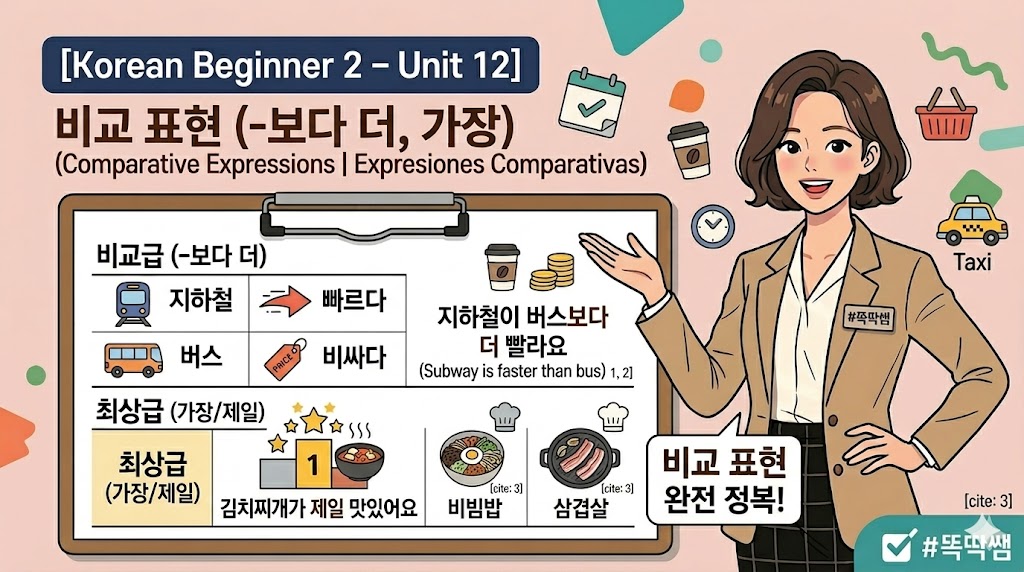
🇰🇷 [Korean Beginner 2 – Unit 12] 비교 표현 (-보다 더, 가장) | Comparative Expressions | Expresiones Comparativas
🎯 학습 목표 | Learning Goals | Objetivos de Aprendizaje
-보다 더를 사용하여 두 가지를 비교하는 문장을 만들 수 있다. Be able to make comparative sentences using -보다 더. Ser capaz de hacer oraciones comparativas usando -보다 더.
가장을 사용하여 최상급 표현을 말할 수 있다. Be able to use 가장 to express superlatives. Ser capaz de usar 가장 para expresar superlativos.
일상 대화에서 자연스럽게 비교 표현을 사용할 수 있다. Naturally use comparative expressions in everyday conversations. Usar de forma natural expresiones comparativas en conversaciones cotidianas.
1️⃣ 핵심 어휘 | Key Vocabulary | Vocabulario Clave
📊 비교 관련 어휘 | Comparison Vocabulary | Vocabulario de Comparación
| 한국어 (Korean) | English | Spanish | 발음 (Pronunciation) |
| 비교하다 | to compare | comparar | bi-gyo-ha-da |
| -보다 | than | que (comparativo) | bo-da |
| 더 | more / -er | más | deo |
| 덜 | less | menos | deol |
| 가장 | the most / -est | el/la más | ga-jang |
| 제일 | the most / number one | el/la mejor / el/la más | je-il |
| 똑같다 | to be the same | ser igual | ttok-gat-da |
| 다르다 | to be different | ser diferente | da-reu-da |
| 비슷하다 | to be similar | ser similar | bi-seu-ta-da |
| 훨씬 | much more / by far | mucho más | hwol-ssin |
| 조금 더 | a little more | un poco más | jo-geum deo |
| 훨씬 더 | much more | mucho más | hwol-ssin deo |
📝 자주 쓰는 형용사 | Common Adjectives | Adjetivos Comunes
| 한국어 (Korean) | English | Spanish | 발음 (Pronunciation) |
| 크다 | to be big | ser grande | keu-da |
| 작다 | to be small | ser pequeño | jak-da |
| 많다 | to be a lot | ser mucho | man-ta |
| 적다 | to be few / little | ser poco | jeok-da |
| 빠르다 | to be fast | ser rápido | ppa-reu-da |
| 느리다 | to be slow | ser lento | neu-ri-da |
| 비싸다 | to be expensive | ser caro | bi-ssa-da |
| 싸다 | to be cheap | ser barato | ssa-da |
| 맛있다 | to be delicious | estar delicioso | ma-sit-da |
| 쉽다 | to be easy | ser fácil | swip-da |
| 어렵다 | to be difficult | ser difícil | eo-ryeop-da |
| 재미있다 | to be fun / interesting | ser divertido | jae-mi-it-da |
📌 문법 노트 | Grammar Note | Nota Gramatical
① 비교급: A는 B보다 더 ~해요 | Comparative: A is more ~ than B | Comparativo: A es más ~ que B
두 가지를 비교할 때 A는 B보다 더 + 형용사 를 사용해요. When comparing two things, use A는 B보다 더 + adjective. Al comparar dos cosas, usa A는 B보다 더 + adjetivo.
영어의 "A is -er than B" 또는 "A is more ~ than B", 스페인어의 "A es más ~ que B" 와 같아요! This is like "A is more ~ than B" in English. ¡Es como "A es más ~ que B" en español!
| 한국어 (Korean) | English | Spanish |
| 한국어는 영어보다 더 어려워요. | Korean is more difficult than English. | El coreano es más difícil que el inglés. |
| 버스가 지하철보다 더 느려요. | The bus is slower than the subway. | El autobús es más lento que el metro. |
| 이 가방이 저 가방보다 더 비싸요. | This bag is more expensive than that bag. | Este bolso es más caro que ese bolso. |
💡 포인트 | Key Point | Punto Clave
더 는 생략할 수 있어요! "A는 B보다 형용사" 도 자연스러워요. 더 can be omitted! "A는 B보다 + adjective" is also natural. 더 se puede omitir. ¡"A는 B보다 + adjetivo" también es natural!
② 최상급: 가장 / 제일 + 형용사 | Superlative: 가장 / 제일 + adjective | Superlativo: 가장 / 제일 + adjetivo
가장 높은 정도를 표현할 때 가장 또는 제일 을 사용해요. To express the highest degree, use 가장 or 제일. Para expresar el grado más alto, usa 가장 o 제일.
영어의 "the most ~" 또는 "the -est", 스페인어의 "el/la más ~" 와 같아요! This is like "the most ~" or "the -est" in English. ¡Es como "el/la más ~" en español!
| 한국어 (Korean) | English | Spanish |
| 한국어가 가장 재미있어요. | Korean is the most fun. | El coreano es el más divertido. |
| 이게 제일 맛있어요. | This is the most delicious. | Esto es lo más delicioso. |
| 서울이 가장 큰 도시예요. | Seoul is the biggest city. | Seúl es la ciudad más grande. |
💡 가장 vs 제일 | 가장 vs 제일 | 가장 vs 제일
가장 과 제일 은 같은 의미예요. 둘 다 자유롭게 사용할 수 있어요! 가장 and 제일 have the same meaning. You can freely use either one! 가장 y 제일 tienen el mismo significado. ¡Puedes usar cualquiera de los dos libremente!
③ 추가 비교 표현 | Additional Comparison Expressions | Expresiones Comparativas Adicionales
| 한국어 (Korean) | English | Spanish |
| A는 B보다 훨씬 더 ~해요. | A is much more ~ than B. | A es mucho más ~ que B. |
| A는 B보다 조금 더 ~해요. | A is a little more ~ than B. | A es un poco más ~ que B. |
| A는 B보다 덜 ~해요. | A is less ~ than B. | A es menos ~ que B. |
| A와 B는 똑같아요. | A and B are the same. | A y B son iguales. |
| A와 B는 비슷해요. | A and B are similar. | A y B son similares. |
2️⃣ 자주 쓰는 문장 | Useful Phrases | Frases Útiles
| 한국어 (Korean) | English | Spanish |
| 어느 게 더 좋아요? | Which one do you like more? | ¿Cuál te gusta más? |
| 이게 저것보다 더 좋아요. | This is better than that. | Esto es mejor que aquello. |
| 한국 음식 중에 뭐가 제일 맛있어요? | What Korean food is the most delicious? | ¿Qué comida coreana es la más deliciosa? |
| 비빔밥이 가장 좋아요. | Bibimbap is my favorite. | El bibimbap es el que más me gusta. |
| 지하철이 버스보다 훨씬 빨라요. | The subway is much faster than the bus. | El metro es mucho más rápido que el autobús. |
| 오늘이 어제보다 조금 더 추워요. | Today is a little colder than yesterday. | Hoy hace un poco más de frío que ayer. |
| 한국어가 스페인어보다 어려워요? | Is Korean more difficult than Spanish? | ¿El coreano es más difícil que el español? |
| 둘 다 비슷해요. | Both are similar. | Los dos son similares. |
| 이게 제일 싸요. | This is the cheapest. | Esto es lo más barato. |
| 어느 게 더 커요? | Which one is bigger? | ¿Cuál es más grande? |
3️⃣ 실전 대화 연습 | Real-Life Dialogue Practice | Práctica de Diálogo Real
혼자 공부한다면 A와 B 역할을 모두 소리 내어 읽어보세요! If you're studying alone, read both roles aloud! ¡Si estudias solo, lee en voz alta los dos roles!
대화 1: 음식 비교하기 | Comparing Food | Comparar Comida
👤 A: 비빔밥이랑 김치찌개 중에 뭐가 더 좋아요? (Which do you like more, bibimbap or kimchi jjigae?) (¿Cuál te gusta más, el bibimbap o el kimchi jjigae?)
👤 B: 저는 비빔밥이 더 좋아요. 덜 매워서요. (I like bibimbap more. It's less spicy.) (Me gusta más el bibimbap. Es menos picante.)
👤 A: 그렇군요! 저는 김치찌개가 제일 좋아요. 맵지만 너무 맛있어요! (I see! Kimchi jjigae is my favorite. It's spicy but so delicious!) (¡Ya veo! El kimchi jjigae es el que más me gusta. ¡Es picante pero está buenísimo!)
👤 B: 한국 음식 중에 가장 좋아하는 게 뭐예요? (What is your favorite Korean food?) (¿Cuál es tu comida coreana favorita?)
👤 A: 삼겹살이요! 모든 음식 중에 가장 맛있어요! (Samgyeopsal! It's the most delicious of all foods!) (¡El samgyeopsal! ¡Es lo más delicioso de toda la comida!)
대화 2: 교통수단 비교하기 | Comparing Transportation | Comparar Medios de Transporte
👤 A: 버스랑 지하철 중에 어느 게 더 빨라요? (Which is faster, the bus or the subway?) (¿Cuál es más rápido, el autobús o el metro?)
👤 B: 지하철이 버스보다 훨씬 더 빨라요. 막히지 않아서요. (The subway is much faster than the bus. It doesn't get stuck in traffic.) (El metro es mucho más rápido que el autobús. No hay atascos.)
👤 A: 요금은요? 어느 게 더 싸요? (What about the fare? Which is cheaper?) (¿Y la tarifa? ¿Cuál es más barata?)
👤 B: 둘 다 비슷해요. 조금 차이가 있지만 거의 똑같아요. (Both are similar. There's a small difference but they're almost the same.) (Los dos son similares. Hay una pequeña diferencia pero son casi iguales.)
대화 3: 언어 비교하기 | Comparing Languages | Comparar Idiomas
👤 A: 한국어랑 일본어 중에 어느 게 더 어려워요? (Which is more difficult, Korean or Japanese?) (¿Cuál es más difícil, el coreano o el japonés?)
👤 B: 저한테는 한국어가 조금 더 어려워요. 발음이 어렵거든요. (For me, Korean is a little more difficult. The pronunciation is hard.) (Para mí, el coreano es un poco más difícil. La pronunciación es complicada.)
👤 A: 그래요? 저는 한국어가 제일 재미있어요! (Really? Korean is the most interesting for me!) (¿En serio? ¡Para mí el coreano es el más interesante!)
👤 B: 맞아요! 어렵지만 가장 재미있는 언어예요! (That's right! It's difficult but the most fun language!) (¡Es verdad! ¡Es difícil pero el idioma más divertido!)
🌏 문화 팁 | Culture Tip | Consejo Cultural
🏆 한국인의 비교 문화 | Korean Comparison Culture | Cultura de Comparación Coreana 한국에서는 일상 대화에서 비교 표현을 매우 자주 사용해요. 음식, 장소, 가격 등을 비교하며 의사결정을 하는 것이 자연스러운 문화예요. In Korea, comparative expressions are used very frequently in everyday conversations. It's a natural culture to make decisions by comparing food, places, prices, etc. En Corea, las expresiones comparativas se usan con mucha frecuencia en las conversaciones cotidianas. Es una cultura natural tomar decisiones comparando comida, lugares, precios, etc.
🍽️ 음식 비교 | Food Comparisons | Comparaciones de Comida 한국인들은 식당을 고를 때 "어느 집이 더 맛있어?" 또는 "어디가 제일 유명해?" 같은 비교 표현을 자주 써요. When choosing a restaurant, Koreans often use comparisons like "Which place is more delicious?" or "Which is the most famous?" Al elegir restaurante, los coreanos usan comparaciones frecuentemente como "¿Cuál es más delicioso?" o "¿Cuál es el más famoso?"
🚇 교통 비교 | Transportation Comparisons | Comparaciones de Transporte 서울에서는 "지하철이 버스보다 빨라요" 처럼 교통수단을 비교하는 표현을 일상적으로 사용해요. 서울의 지하철은 세계에서 가장 편리한 교통수단 중 하나예요! In Seoul, comparing transportation like "The subway is faster than the bus" is commonly used. Seoul's subway is one of the most convenient transportation systems in the world! En Seúl, es común comparar el transporte como "El metro es más rápido que el autobús". ¡El metro de Seúl es uno de los sistemas de transporte más convenientes del mundo!
✏️ 연습 문제 | Practice Exercises | Ejercicios de Práctica
먼저 스스로 풀어보고, 아래 정답과 비교해 보세요! Try answering on your own first, then check the answers below! ¡Intenta responder por tu cuenta primero y luego comprueba las respuestas!
연습 1. 빈칸에 알맞은 표현을 넣으세요. Fill in the blanks with the correct expression. Rellena los espacios con la expresión correcta.
보기 | Word bank | Banco de palabras: 보다 더 / 가장 / 제일 / 훨씬 더 / 덜 / 똑같아요
① 사과가 바나나 ____________ 비싸요. (more expensive than) ② 한국어가 ____________ 재미있어요. (the most fun) ③ 지하철이 버스보다 ____________ 빨라요. (much faster) ④ 이 음식은 저것보다 ____________ 매워요. (less spicy) ⑤ 두 가격이 ____________. (the same) ⑥ 비빔밥이 ____________ 맛있어요. (the most delicious)
✅ 정답 | Answers | Respuestas
① 보다 더 ② 가장 ③ 훨씬 더 ④ 덜 ⑤ 똑같아요 ⑥ 제일
연습 2. 다음 문장을 한국어로 바꾸세요. Translate the sentences into Korean. Traduce las oraciones al coreano.
① Korean is more interesting than Japanese. / El coreano es más interesante que el japonés. → ___________________________
② This restaurant is the most delicious. / Este restaurante es el más delicioso. → ___________________________
③ Today is a little colder than yesterday. / Hoy hace un poco más de frío que ayer. → ___________________________
④ Which do you like more, coffee or tea? / ¿Cuál te gusta más, el café o el té? → ___________________________
✅ 정답 | Answers | Respuestas
① 한국어가 일본어보다 더 재미있어요. ② 이 식당이 가장 맛있어요. ③ 오늘이 어제보다 조금 더 추워요. ④ 커피랑 차 중에 어느 게 더 좋아요?
연습 3. 아래 대화의 빈칸을 채우세요. Fill in the blanks in the dialogue. Rellena los espacios en el diálogo.
👤 A: 사과랑 수박 중에 어느 게 ____________ 달아요? (sweeter) (Which is sweeter, apple or watermelon?) (¿Cuál es más dulce, la manzana o la sandía?)
👤 B: 수박이 사과보다 ____________ 달아요. (더) (Watermelon is sweeter than apple.) (La sandía es más dulce que la manzana.)
👤 A: 그럼 과일 중에 ____________ 단 게 뭐예요? (the most) (Then what is the sweetest fruit?) (Entonces, ¿cuál es la fruta más dulce?)
👤 B: 저는 망고가 ____________ 달다고 생각해요. (제일) (I think mango is the sweetest.) (Creo que el mango es el más dulce.)
✅ 정답 | Answers | Respuestas
① 더 ② 더 ③ 가장 ④ 제일
🎯 정리 | Summary | Resumen
오늘은 한국어 비교 표현을 배웠습니다. 핵심 내용을 정리해 볼까요? Today we learned Korean comparative expressions. Let's review the key points! Hoy aprendimos las expresiones comparativas en coreano. ¡Repasemos los puntos clave!
| 핵심 표현 (Korean) | English | Spanish |
| A는 B보다 더 ~해요. | A is more ~ than B. | A es más ~ que B. |
| A는 B보다 훨씬 더 ~해요. | A is much more ~ than B. | A es mucho más ~ que B. |
| A는 B보다 덜 ~해요. | A is less ~ than B. | A es menos ~ que B. |
| 가장 / 제일 + 형용사 | the most + adjective | el/la más + adjetivo |
| A와 B는 똑같아요. | A and B are the same. | A y B son iguales. |
💡 독학 팁 | Self-Study Tip | Consejo de Autoestudio
✍️ 비교 일기 쓰기 | Write a Comparison Journal | Escribe un Diario de Comparaciones 주변에 있는 두 가지 물건이나 장소를 골라 한국어로 비교하는 문장을 매일 3개씩 써보세요. 예: "내 가방이 친구 가방보다 더 커요." Every day, choose two objects or places around you and write 3 comparison sentences in Korean. E.g., "My bag is bigger than my friend's bag." Cada día, elige dos objetos o lugares a tu alrededor y escribe 3 oraciones comparativas en coreano. Ej: "Mi bolso es más grande que el de mi amigo."
📺 드라마에서 찾아보기 | Find It in Dramas | Encuéntralo en los Dramas 한국 드라마를 볼 때 "보다 더", "가장", "제일" 표현이 나오면 멈추고 따라 말해보세요. 자연스러운 비교 표현을 빨리 익힐 수 있어요! While watching Korean dramas, pause and repeat whenever you hear "보다 더", "가장", or "제일". You'll quickly learn natural comparison expressions! Al ver dramas coreanos, pausa y repite cada vez que escuches "보다 더", "가장" o "제일". ¡Aprenderás rápidamente expresiones comparativas naturales!
🏷️ 해시태그 | Hashtags
#한국어비교표현 #KoreanComparatives #ComparativosCoreanos #보다더 #MoreThanKorean #가장제일 #SuperlativeKorean #SuperlativoCoreano #KoreanBeginner2 #LearnKorean #AprendiendoCoreano #SelfStudyKorean #독학한국어 #한국어문법 #똑딱쌤