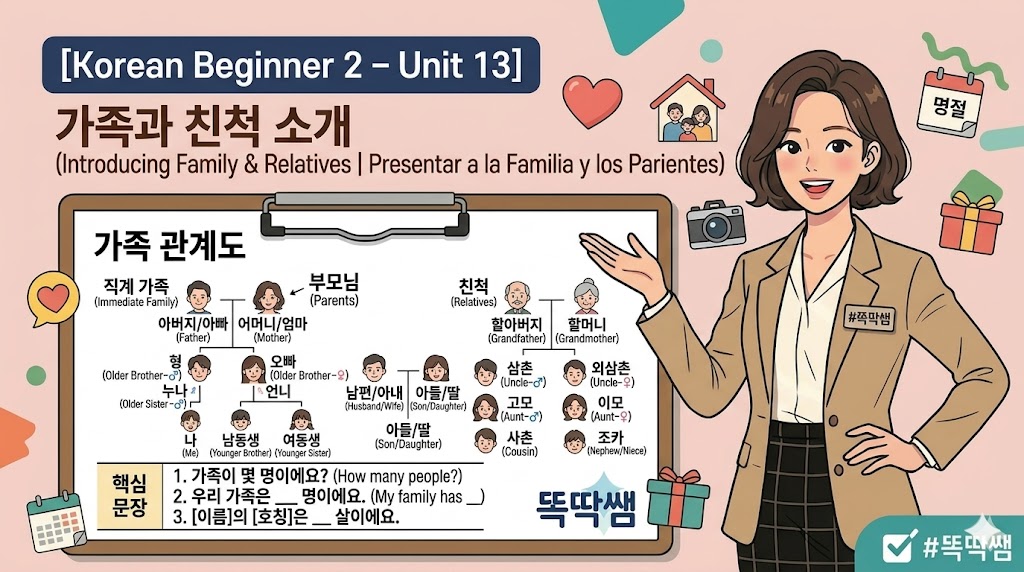
🇰🇷 [Korean Beginner 2 – Unit 13] 가족과 친척 소개 | Introducing Family & Relatives | Presentar a la Familia y los Parientes
🎯 학습 목표 | Learning Goals | Objetivos de Aprendizaje
가족과 친척을 한국어로 소개할 수 있다. Be able to introduce family members and relatives in Korean. Ser capaz de presentar a los miembros de la familia y parientes en coreano.
가족 관계를 나타내는 어휘를 올바르게 사용할 수 있다. Correctly use vocabulary that describes family relationships. Usar correctamente el vocabulario que describe las relaciones familiares.
가족에 대해 묻고 답하는 표현을 자연스럽게 말할 수 있다. Naturally ask and answer questions about family. Preguntar y responder de forma natural sobre la familia.
1️⃣ 핵심 어휘 | Key Vocabulary | Vocabulario Clave
👨👩👧👦 직계 가족 | Immediate Family | Familia Inmediata
| 한국어 (Korean) | English | Spanish | 발음 (Pronunciation) |
| 가족 | family | familia | ga-jok |
| 부모님 | parents | padres | bu-mo-nim |
| 아버지 / 아빠 | father / dad | padre / papá | a-beo-ji / a-ppa |
| 어머니 / 엄마 | mother / mom | madre / mamá | eo-meo-ni / eom-ma |
| 형 | older brother (male speaker) | hermano mayor (hablante masculino) | hyeong |
| 오빠 | older brother (female speaker) | hermano mayor (hablante femenino) | o-ppa |
| 누나 | older sister (male speaker) | hermana mayor (hablante masculino) | nu-na |
| 언니 | older sister (female speaker) | hermana mayor (hablante femenino) | eon-ni |
| 남동생 | younger brother | hermano menor | nam-dong-saeng |
| 여동생 | younger sister | hermana menor | yeo-dong-saeng |
| 남편 | husband | marido / esposo | nam-pyeon |
| 아내 / 와이프 | wife | esposa | a-nae / wa-i-peu |
| 아들 | son | hijo | a-deul |
| 딸 | daughter | hija | ttal |
👴👵 친척 | Relatives | Parientes
| 한국어 (Korean) | English | Spanish | 발음 (Pronunciation) |
| 할아버지 | grandfather | abuelo | ha-ra-beo-ji |
| 할머니 | grandmother | abuela | hal-meo-ni |
| 삼촌 | uncle (father's side) | tío (lado paterno) | sam-chon |
| 외삼촌 | uncle (mother's side) | tío (lado materno) | oe-sam-chon |
| 고모 | aunt (father's sister) | tía (hermana del padre) | go-mo |
| 이모 | aunt (mother's sister) | tía (hermana de la madre) | i-mo |
| 사촌 | cousin | primo/a | sa-chon |
| 조카 | nephew / niece | sobrino/a | jo-ka |
| 친척 | relative | pariente | chin-cheok |
📌 문법 노트 | Grammar Note | Nota Gramatical
① 가족 소개할 때 높임말 | Honorifics When Introducing Family | Honoríficos al Presentar a la Familia
한국어에서는 가족을 소개할 때 나이 많은 가족에게는 높임말을 사용해요. In Korean, when introducing family, use honorific language for older family members. En coreano, al presentar a la familia, usa el lenguaje honorífico para los miembros mayores.
| 일반 표현 (Regular) | 높임 표현 (Honorific) | English | Spanish |
| 아버지가 있어요. | 아버지께서 계세요. | My father is here. | Mi padre está aquí. |
| 할머니가 먹어요. | 할머니께서 드세요. | Grandmother eats. | La abuela come. |
| 부모님이 왔어요. | 부모님께서 오셨어요. | My parents came. | Mis padres vinieron. |
② 가족 수 말하기 | Saying the Number of Family Members | Decir el Número de Miembros de la Familia
가족 수를 말할 때는 고유어 숫자 를 사용해요! When talking about the number of family members, use native Korean numbers! Al hablar del número de miembros de la familia, ¡usa los números nativos coreanos!
| 한국어 (Korean) | English | Spanish | 예시 (Example) |
| 한 명 | one person | una persona | 가족이 한 명이에요. |
| 두 명 | two people | dos personas | 형제가 두 명이에요. |
| 세 명 | three people | tres personas | 가족이 세 명이에요. |
| 네 명 | four people | cuatro personas | 우리 가족은 네 명이에요. |
| 다섯 명 | five people | cinco personas | 가족이 다섯 명이에요. |
2️⃣ 자주 쓰는 문장 | Useful Phrases | Frases Útiles
👨👩👧 가족에 대해 묻기 | Asking About Family | Preguntar sobre la Familia
| 한국어 (Korean) | English | Spanish |
| 가족이 몇 명이에요? | How many people are in your family? | ¿Cuántas personas hay en tu familia? |
| 형제자매가 있어요? | Do you have brothers or sisters? | ¿Tienes hermanos o hermanas? |
| 부모님은 어디에 사세요? | Where do your parents live? | ¿Dónde viven tus padres? |
| 결혼하셨어요? | Are you married? | ¿Estás casado/a? |
| 자녀가 있어요? | Do you have children? | ¿Tienes hijos? |
| 형제가 몇 명이에요? | How many siblings do you have? | ¿Cuántos hermanos tienes? |
👨👩👧 가족 소개하기 | Introducing Family | Presentar a la Familia
| 한국어 (Korean) | English | Spanish |
| 우리 가족은 네 명이에요. | There are four people in my family. | En mi familia somos cuatro personas. |
| 저는 외동이에요. | I'm an only child. | Soy hijo/a único/a. |
| 형이 한 명 있어요. | I have one older brother. | Tengo un hermano mayor. |
| 언니가 두 명 있어요. | I have two older sisters. | Tengo dos hermanas mayores. |
| 부모님은 서울에 사세요. | My parents live in Seoul. | Mis padres viven en Seúl. |
| 저는 결혼했어요. | I'm married. | Estoy casado/a. |
| 아직 결혼 안 했어요. | I'm not married yet. | Todavía no estoy casado/a. |
| 아이가 두 명 있어요. | I have two children. | Tengo dos hijos. |
3️⃣ 실전 대화 연습 | Real-Life Dialogue Practice | Práctica de Diálogo Real
혼자 공부한다면 A와 B 역할을 모두 소리 내어 읽어보세요! If you're studying alone, read both roles aloud! ¡Si estudias solo, lee en voz alta los dos roles!
대화 1: 가족 소개하기 | Introducing Your Family | Presentar tu Familia
👤 A: 가족이 몇 명이에요? (How many people are in your family?) (¿Cuántas personas hay en tu familia?)
👤 B: 우리 가족은 다섯 명이에요. 부모님, 오빠, 저, 그리고 여동생이 있어요. (There are five people in my family. My parents, older brother, me, and younger sister.) (En mi familia somos cinco. Mis padres, mi hermano mayor, yo y mi hermana menor.)
👤 A: 오빠는 몇 살이에요? (How old is your older brother?) (¿Cuántos años tiene tu hermano mayor?)
👤 B: 스물여섯 살이에요. 지금 회사에 다녀요. (He's 26 years old. He's working at a company now.) (Tiene 26 años. Ahora trabaja en una empresa.)
👤 A: 그렇군요! 부모님은 어디에 사세요? (I see! Where do your parents live?) (¡Ya veo! ¿Dónde viven tus padres?)
👤 B: 부산에 사세요. 저만 서울에 살아요. (They live in Busan. Only I live in Seoul.) (Viven en Busan. Solo yo vivo en Seúl.)
대화 2: 결혼과 자녀에 대해 | About Marriage and Children | Sobre el Matrimonio y los Hijos
👤 A: 결혼하셨어요? (Are you married?) (¿Estás casado/a?)
👤 B: 네, 결혼했어요. 작년에 했어요. (Yes, I'm married. We got married last year.) (Sí, estoy casado/a. Nos casamos el año pasado.)
👤 A: 축하해요! 자녀는 있어요? (Congratulations! Do you have children?) (¡Enhorabuena! ¿Tienes hijos?)
👤 B: 아직 없어요. 나중에 아이를 갖고 싶어요. (Not yet. I want to have children later.) (Todavía no. Quiero tener hijos más adelante.)
👤 A: 민수 씨는요? 형제자매가 있어요? (How about Minsu? Do you have brothers or sisters?) (¿Y Minsu? ¿Tienes hermanos o hermanas?)
👤 A: 저는 외동이에요. 그래서 어릴 때 조금 외로웠어요. (I'm an only child. So I was a little lonely when I was young.) (Soy hijo único. Por eso me sentía un poco solo de pequeño.)
대화 3: 친척 이야기 | Talking About Relatives | Hablar de los Parientes
👤 A: 이번 추석에 뭐 해요? (What are you doing this Chuseok?) (¿Qué haces este Chuseok?)
👤 B: 할머니 댁에 가요. 친척들이 다 모여요. (I'm going to my grandmother's house. All the relatives gather together.) (Voy a casa de mi abuela. Se reúnen todos los parientes.)
👤 A: 친척이 많아요? (Do you have a lot of relatives?) (¿Tienes muchos parientes?)
👤 B: 네, 사촌만 열 명이에요! 정말 시끌시끌해요. (Yes, I have ten cousins alone! It's really noisy.) (Sí, ¡solo tengo diez primos! Es muy animado.)
👤 A: 와, 정말요? 저는 사촌이 두 명밖에 없어요. (Wow, really? I only have two cousins.) (¡Vaya, en serio! Yo solo tengo dos primos.)
🌏 문화 팁 | Culture Tip | Consejo Cultural
🏠 한국의 가족 문화 | Korean Family Culture | Cultura Familiar Coreana 한국에서는 가족 관계를 매우 중요하게 생각해요. 명절(설날, 추석)에는 온 가족이 모이는 것이 전통이에요. In Korea, family relationships are considered very important. It's a tradition for the whole family to gather during holidays like Seollal and Chuseok. En Corea, las relaciones familiares se consideran muy importantes. Es tradición que toda la familia se reúna en festividades como Seollal y Chuseok.
👨👩👧 호칭의 특징 | Unique Naming System | Sistema de Nombres Único 한국어에서는 말하는 사람의 성별에 따라 형제자매 호칭이 달라요. 예를 들어 남성은 오빠 대신 형, 누나 대신 언니를 사용해요. In Korean, sibling terms change depending on the speaker's gender. For example, males use 형 instead of 오빠, and 누나 instead of 언니. En coreano, los términos para los hermanos cambian según el género del hablante. Por ejemplo, los hombres usan 형 en lugar de 오빠 y 누나 en lugar de 언니.
🎂 가족 호칭과 나이 | Family Terms and Age | Términos Familiares y Edad 한국에서는 나이 차이가 한 살이어도 형, 오빠, 누나, 언니라고 불러요. 나이에 따른 호칭이 매우 엄격해요. In Korea, even a one-year age difference means calling someone 형, 오빠, 누나, or 언니. The naming system based on age is very strict. En Corea, incluso una diferencia de un año hace que se llame a alguien 형, 오빠, 누나 o 언니. El sistema de nombres basado en la edad es muy estricto.
🏡 외동 문화 | Only Child Culture | Cultura del Hijo Único 최근 한국에서는 저출산으로 인해 **외동(외동아들, 외동딸)**이 많아지고 있어요. "형제자매 있어요?"는 자주 나오는 대화 주제예요. Recently in Korea, due to low birth rates, only children are becoming more common. "Do you have siblings?" is a frequently occurring conversation topic. Recientemente en Corea, debido a la baja tasa de natalidad, los hijos únicos son cada vez más comunes. "¿Tienes hermanos?" es un tema de conversación frecuente.
✏️ 연습 문제 | Practice Exercises | Ejercicios de Práctica
먼저 스스로 풀어보고, 아래 정답과 비교해 보세요! Try answering on your own first, then check the answers below! ¡Intenta responder por tu cuenta primero y luego comprueba las respuestas!
연습 1. 알맞은 가족 호칭을 넣으세요. Fill in the correct family term. Rellena con el término familiar correcto.
① 아버지의 어머니 → ____________ (grandmother) ② 어머니의 남자 형제 → ____________ (uncle, mother's side) ③ 여성 화자가 자신의 남자 형 → ____________ (older brother, female speaker) ④ 남성 화자가 자신의 여자 형 → ____________ (older sister, male speaker) ⑤ 아버지의 여자 형제 → ____________ (aunt, father's sister) ⑥ 형제자매의 자녀 → ____________ (nephew / niece)
✅ 정답 | Answers | Respuestas
① 할머니 ② 외삼촌 ③ 오빠 ④ 누나 ⑤ 고모 ⑥ 조카
연습 2. 빈칸에 알맞은 표현을 넣으세요. Fill in the blanks with the correct expression. Rellena los espacios con la expresión correcta.
① 가족 수를 물어볼 때: "가족이 ____________ 명이에요?"
② 형제자매가 없을 때: "저는 ____________이에요."
③ 부모님의 거주지를 말할 때: "부모님은 부산에 ____________."
④ 결혼 여부를 물어볼 때: "____________하셨어요?"
✅ 정답 | Answers | Respuestas
① 몇 ② 외동 ③ 사세요 ④ 결혼
연습 3. 문장을 한국어로 바꾸세요. Translate the sentences into Korean. Traduce las oraciones al coreano.
① There are four people in my family. / En mi familia somos cuatro personas. → ___________________________
② I have one younger sister. / Tengo una hermana menor. → ___________________________
③ My parents live in Busan. / Mis padres viven en Busan. → ___________________________
④ I'm not married yet. / Todavía no estoy casado/a. → ___________________________
⑤ Do you have any siblings? / ¿Tienes hermanos o hermanas? → ___________________________
✅ 정답 | Answers | Respuestas
① 우리 가족은 네 명이에요. ② 여동생이 한 명 있어요. ③ 부모님은 부산에 사세요. ④ 아직 결혼 안 했어요. ⑤ 형제자매가 있어요?
🎯 정리 | Summary | Resumen
오늘은 가족과 친척을 소개하는 방법을 배웠습니다. 핵심 내용을 정리해 볼까요? Today we learned how to introduce family and relatives. Let's review the key points! Hoy aprendimos cómo presentar a la familia y los parientes. ¡Repasemos los puntos clave!
| 핵심 내용 (Korean) | English | Spanish |
| 가족이 몇 명이에요? | How many people are in your family? | ¿Cuántas personas hay en tu familia? |
| 우리 가족은 __ 명이에요. | There are __ people in my family. | En mi familia somos __ personas. |
| 형/오빠/누나/언니 | Older sibling (varies by speaker gender) | Hermano/a mayor (varía según el género) |
| 말하는 사람 성별에 따라 호칭이 달라요! | Terms change by speaker's gender! | ¡Los términos cambian según el género del hablante! |
| 어른 가족에게는 높임말 사용! | Use honorifics for older family members! | ¡Usa honoríficos para los miembros mayores! |
💡 독학 팁 | Self-Study Tip | Consejo de Autoestudio
📸 가족 사진으로 연습하기 | Practice with Family Photos | Practica con Fotos Familiares 가족 사진을 보면서 각 가족을 한국어로 소개하는 연습을 해보세요. "이 분은 저의 어머니예요. 부산에 사세요." 처럼 문장을 만들어 보세요! Practice introducing each family member in Korean while looking at family photos. Make sentences like "This is my mother. She lives in Busan." Practica presentando a cada miembro de la familia en coreano mientras miras fotos familiares. ¡Haz oraciones como "Esta es mi madre. Vive en Busan"!
✍️ 나의 가족 소개문 쓰기 | Write Your Family Introduction | Escribe la Presentación de tu Familia 오늘 배운 표현을 활용해서 자신의 가족을 소개하는 짧은 글을 한국어로 써보세요. 5문장 이상 도전해 보세요! Use today's expressions to write a short introduction of your family in Korean. Try to write at least 5 sentences! Usa las expresiones de hoy para escribir una presentación corta de tu familia en coreano. ¡Intenta escribir al menos 5 oraciones!
🏷️ 해시태그 | Hashtags